

By DigVibers
Uganda’s digital transformation agenda is gaining momentum as the Inter-Schools Coding Competition (ISCC) positions itself as a critical pipeline for nurturing future innovators, software developers, and tech entrepreneurs.
The initiative, widely regarded as one of the country’s most impactful youth-focused digital skilling platforms, is equipping secondary school students with practical programming skills and exposing them to real-world technology applications.
By blending competition with hands-on learning, ISCC is shifting ICT education from theory to opportunity—preparing students to actively participate in the digital economy.
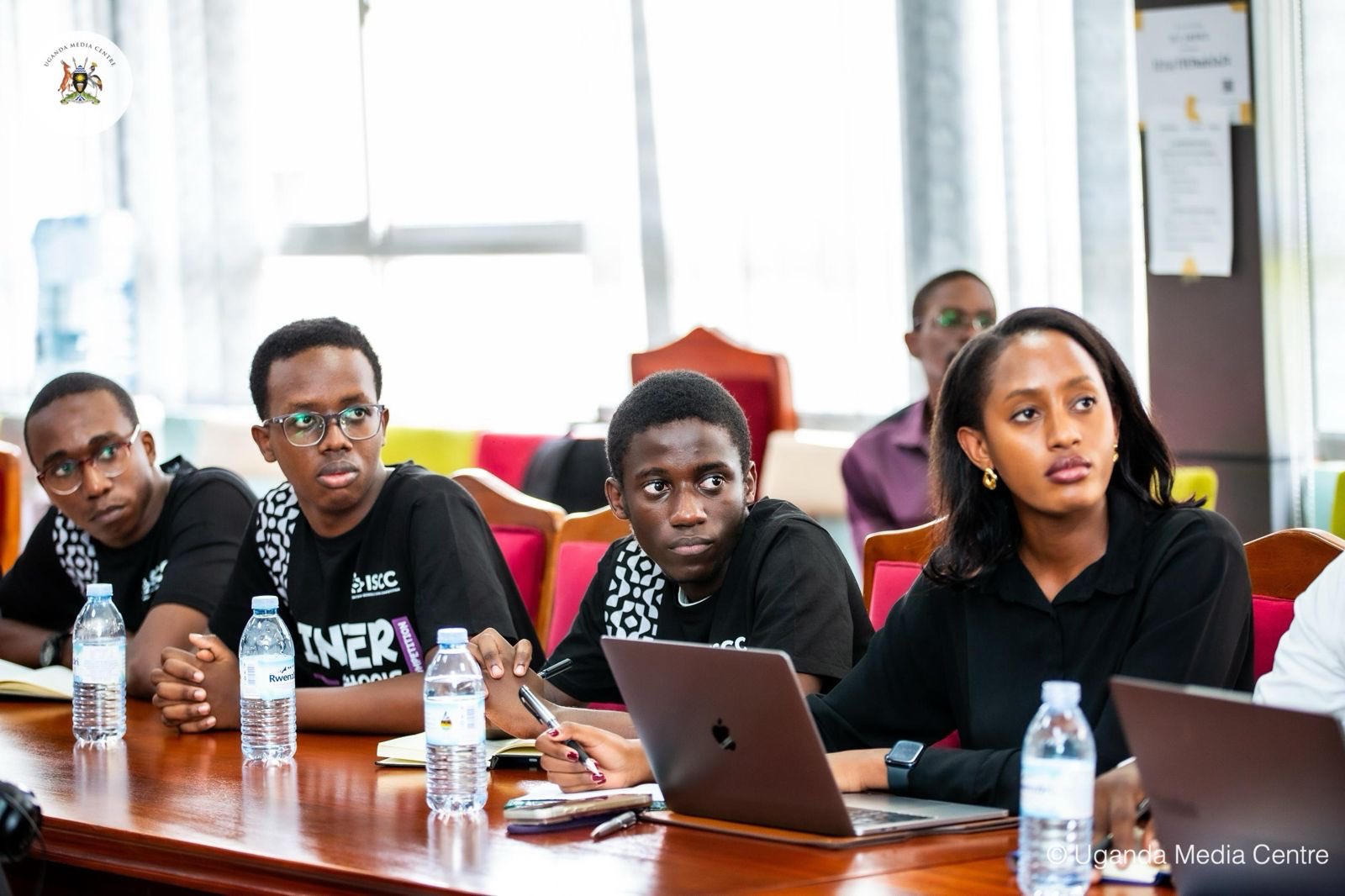
This week, senior government officials reaffirmed their backing of the program during a strategic engagement at the National ICT Innovation Hub. The meeting brought together the Permanent Secretary at the Ministry of ICT and National Guidance, Aminah Zawedde, and the Executive Director of the Uganda Media Centre, Alan Kasujja, alongside ISCC organizers.
Dr. Zawedde emphasized that coding and digital problem-solving are no longer optional skills but essential tools for economic participation.
“Digital transformation begins with equipping young people with skills such as coding, analysis, and problem-solving. These are now as essential as learning English and Mathematics,” she said.

Through structured training in Python programming, ISCC has already reached over 4,000 students across 120 schools, introducing them to high-demand fields such as artificial intelligence, machine learning, data science, and software development. These are sectors increasingly shaping global economies—and presenting new opportunities for Uganda’s youthful population.
The program’s competition-based model is central to its success. Students are challenged to design solutions, build applications, and solve real-life problems, fostering innovation, critical thinking, and teamwork. Beyond technical skills, participants gain exposure to how digital tools can address societal challenges—from digital voting systems to automated school management platforms.
ISCC leadership now plans an ambitious scale-up targeting hundreds of schools nationwide, with a long-term vision of reaching hundreds of thousands of learners. This expansion is expected to deepen digital inclusion, particularly in rural and underserved communities where access to advanced ICT training has historically been limited.
Mr. Kasujja highlighted the role of visibility and storytelling in unlocking opportunities for young innovators.
“We are excited to support initiatives that show young people where the opportunities are. This competition is not just about coding—it is about giving visibility to talent across the country,” he said.
He noted that some of the strongest participants are emerging from remote regions, demonstrating that digital potential is not confined to urban centers. With the right tools and exposure, students from across Uganda can compete and excel on a national stage.
The broader impact of ISCC extends beyond the competition itself. Participants are increasingly inspired to pursue careers in technology, launch startups, and develop locally relevant digital solutions. For many, the experience becomes a gateway into Uganda’s growing innovation ecosystem.
Testimonies from past participants underscore this shift. Students have gone on to build prototypes ranging from digital election systems to e-commerce platforms, with some aspiring to create homegrown alternatives to global tech giants.
Government officials say this aligns directly with Uganda’s digital roadmap, which prioritizes innovation, entrepreneurship, and job creation through technology. However, Dr. Zawedde stressed that skilling alone is not enough.
“We must go beyond training and create clear pathways to jobs, innovation opportunities, and rewards that motivate young people to fully participate in the digital economy,” she noted.
As Uganda accelerates its digital ambitions, initiatives like ISCC are proving that the next generation of coders is not only emerging—but already building solutions that could define the country’s technological future.